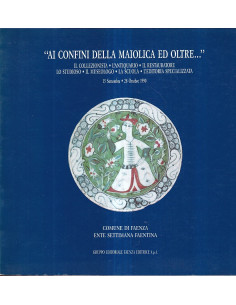
It may seem paradoxical to talk of pottery as if it was an archive, but in fact a cultural history ofRenaissance Italy can be written through its painted pottery. This has been recognised from time to time by maiolica specialists, but much less within the traditional syllabus of Art History as taught in our universities, where maiolica measured against the highest aesthetic criteria of disegno is excluded as 'derivative', in fact brushed off as provincial, a footnote here and there. But the succession of local exhibitions in recent years in Italy, for instance that in Urbino in 1983 on the artistic ambiente of Raphael, is demonstration enough that the notion of the great single masterpiece, the great formative artist, leaves yawning voids in our understanding of what made the Italian Renaissance. At every turn throughout the sixteenth century Italian artists were in some sense involved with painted pottery, either directly or at one remove; patrons, often the richest and most discriminating, from the Medici to Isabella d'Este to Francesco Guicciardini, admired it in 'cabinets' or on tables, and ordered sets with their arms; the taste for classical myth and history found expression in its most ambitious products, and one does not need to be deeply versed in Ovid's Metamorphoses or classical history to appreciate these vivid images, for maiolica has one overriding advantage: it has not been cleaned, scrubbed and cleaned again, like many of the famous pictures of the peri od ; its palette is as fresh as on the day it came from the kiln.