Carrello

- -5%
Disponibile
India is a subcontinent of Asia, approximately the size of Europe without Russia, and its civilization can be traced back over at least five thousand years. During these millennia art has fiourished in all those vast territories. Innumerable monuments are still known to us, and yet they represent only a diminutive fraction of what once existed. Most of the famous cities of the past have disappeared, and only huge mounds indicate the sites where they once stood; the towns of today stand on strata over strata of earlier settlements of which only foundations, potsherds and occasional finds are left; there is hardly a village which does not preserve the name of a once rich town, or where mounds do not invite excavation; there are many hundreds of little known hill forts; and every
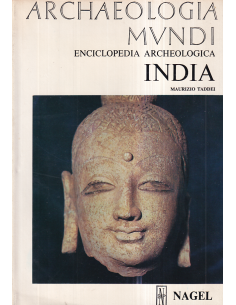
India is a subcontinent of Asia, approximately the size of Europe without Russia, and its civilization can be traced back over at least five thousand years. During these millennia art has fiourished in all those vast territories. Innumerable monuments are still known to us, and yet they represent only a diminutive fraction of what once existed. Most of the famous cities of the past have disappeared, and only huge mounds indicate the sites where they once stood; the towns of today stand on strata over strata of earlier settlements of which only foundations, potsherds and occasional finds are left; there is hardly a village which does not preserve the name of a once rich town, or where mounds do not invite excavation; there are many hundreds of little known hill forts; and every year important ruins are discovered. Yet the monuments still standing are more numerous than all that survives in Europe.
But are we entitled to interpret these monuments as integral aspects of one and the same tradition? Even the monuments known to the average tourist reveal a diversity which seems to defy any attempt at interrelation...